English
 Arabic
 French
 Spanish
 Portuguese
 Deutsch
 Turkish
 Dutch
Dutch
 Italiano
 Russian
 Romaian
 Portuguese (Brazil)
 Greek
Greek
Cсылки для продвижения сайта
Health |
2025-11-09 09:00:31
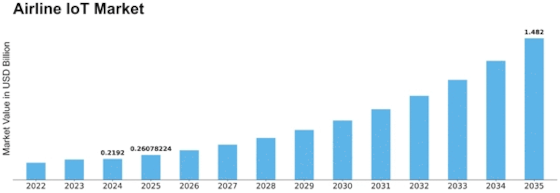
When we think of flying, what often comes to mind are jet engines, cabin crew, and passenger seats. Yet, hidden beneath the glamour of aviation is a network of smart systems working around the clock, fueled by data and connectivity. This silent transformation is reshaping the way airlines operate, maintain aircraft, and engage with passengers — heralding a new age of intelligent aviation.
The term IoT in aviation captures this shift precisely. By embedding sensors, connectivity, and data analytics throughout aircraft systems, ground operations, and passenger services, aviation stakeholders gain real‑time visibility into performance, maintenance, and customer experience. The advantages are manifold: proactive issue detection, optimized fuel usage, better asset tracking, and more responsive service delivery.
Take maintenance operations, for example. Traditional maintenance timelines often rely on fixed schedules or reactive repairs after a fault appears. With IoT‑enabled monitoring, airlines can detect subtle anomalies early — perhaps a sensor reading indicating unusual vibration or temperature — and schedule maintenance only when truly needed. This reduces unscheduled downtime, lowers maintenance costs, and extends the usable life of critical components. In effect, airlines transform maintenance from a reactive chore into a strategic, data‑driven process.
Passenger experience also benefits. Smart baggage tracking, real‑time flight updates, and in‑flight connectivity create a smoother journey. Travelers can receive timely notifications about boarding, gate changes, or baggage status; in‑flight entertainment and connectivity options can be more stable and reliable; and overall transparency boosts trust and satisfaction. The result is an elevated travel experience that meets modern expectations.
From an operations standpoint, IoT in aviation enables airlines to streamline workflows across ground handling, refuelling, turnaround logistics, and air‑traffic coordination. This leads to shorter turnaround times, improved on‑time performance, and more efficient use of aircraft and crew. It's a win for both airlines and passengers.
Nevertheless, widespread IoT adoption raises serious challenges. Data security, network reliability, and interoperability across diverse systems are major concerns. As more devices communicate sensitive data, ensuring robust encryption, secure data transmission, and compliance with aviation regulations becomes critical. Airlines must invest not just in sensors and connectivity — but in secure, scalable infrastructure and governance frameworks.
In conclusion, embedding IoT in aviation represents a profound shift in how airlines think about operations, maintenance, and customer experience. It’s not simply a technological upgrade — it’s a strategic transformation. Those who adapt will likely lead the aviation industry into a future where flights are safer, operations leaner, and passenger journeys more satisfying.
Top Leading Key Players
Honeywell (US), General Electric (US), Thales Group (FR), Rockwell Collins (US), Boeing (US), Airbus (FR), IBM (US), Cisco Systems (US), SITA (CH)
Table of Contents
SECTION I: EXECUTIVE SUMMARY AND KEY HIGHLIGHTS
SECTION II: SCOPING, METHODOLOGY AND MARKET STRUCTURE
SECTION III: QUALITATIVE ANALYSIS
SECTION IV: QUANTITATIVE ANALYSIS
SECTION V: COMPETITIVE ANALYSIS ........
Related Report:
Aircraft Cabin Upgrades Market
Multi-Function Display (MFD) Market
Sonar Systems and Technology Market
Stratospheric UAV Payload Technology Market